Cute Cat Accessories Clipart Set
A Designer’s First Look: Clean, Calm, and Craft-Ready
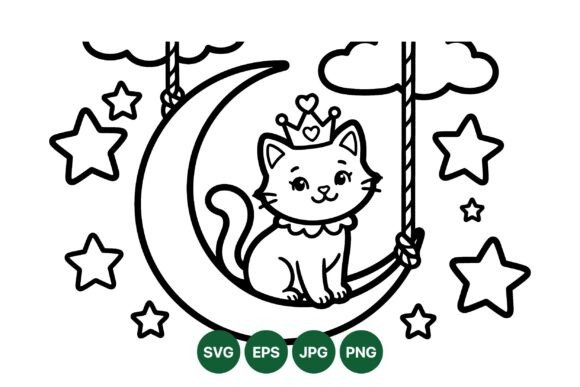
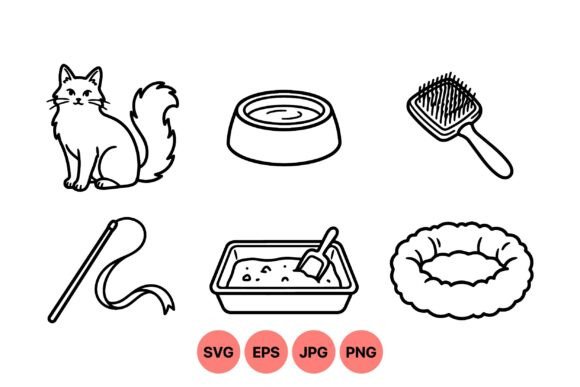
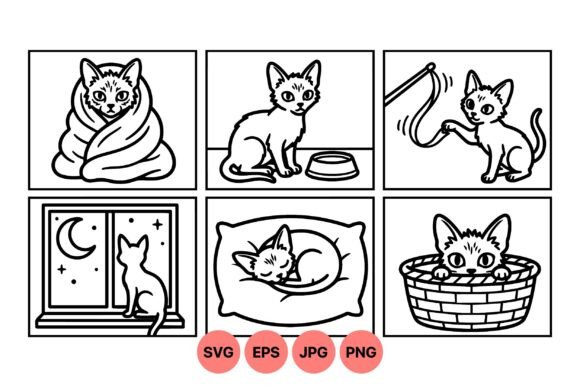
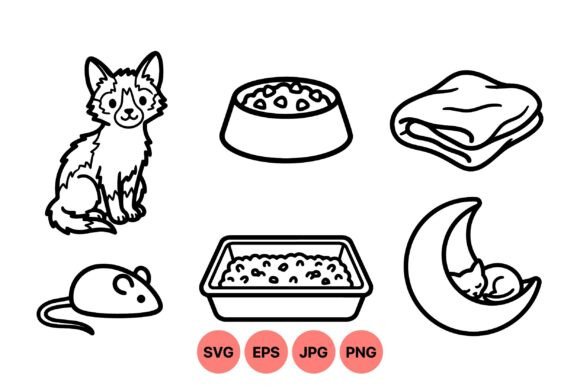
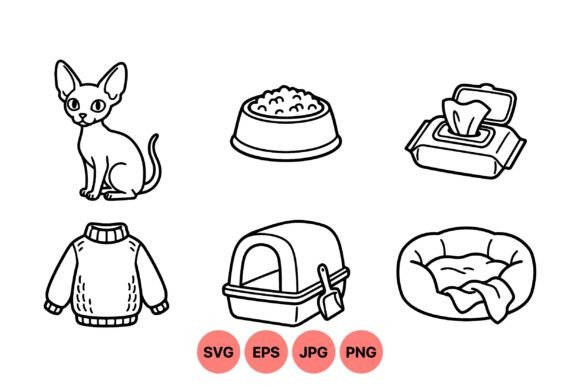
Opening the Cute Cat Accessories Clipart Set, I immediately felt that quiet confidence you get when a design doesn’t shout—but still holds your attention. These aren’t fussy, overly detailed illustrations. They’re simple black-and-white line drawings of a sitting cat paired with gentle, recognizable pet accessories: a food bowl, a tiny sweater, a litter box, wipes, and a cushioned bed—all in clean outline style. The mood is warm, unhurried, and quietly playful—perfect for handmade products where charm lives in restraint.
Why This Set Fits Real Embroidery Projects (Not Just Mockups)
I recently sketched out a custom embroidered tote bag for a local pet boutique—something soft enough for new pet owners but polished enough for their shelf display. That’s exactly where the Cute Cat Accessories Clipart Set landed for me. Not as a standalone logo, but as a cohesive, scalable motif system. Because each element shares the same line weight and visual rhythm, mixing the cat with the sweater or litter box on one hoop feels intentional—not like a collage.
It works especially well for baby embroidery and nursery decor: think onesies with a single cat + bowl, or tea towels with the cat + cushioned bed stitched in soft pastel thread. The outlines translate cleanly into running stitch or satin stitch borders, and the minimal detail avoids fill-stitch density issues on lightweight cotton or linen. As an embroidery file, it’s forgiving—no micro-details that vanish at 2.5” tall, no overlapping lines that confuse auto-digitizing software.
Where It Shines—and Where to Pause
Shines:
- Custom apparel: On midweight sweatshirts or structured tote bags, the outlines hold crispness without heavy underlay. Great for small-batch custom apparel where stitching time matters.
- Embroidered patch production: The consistent line weight means clean edge definition when cut and fused—ideal for iron-on pet-themed patches sold at craft fairs.
- Personalized gift versatility: Pair the cat with a monogrammed initial or a short phrase (“My Cat’s Favorite Things”) for Etsy listings that feel curated, not generic.
- Digital embroidery file usability: Since it’s built as outline-style illustrations, it adapts easily to vector-based digitizing tools—no redrawing needed for basic stitch conversion.
Use with care:
- On stretchy fabric like knits or baby rib—add light tear-away stabilizer beneath *and* topping for clean line integrity.
- For tiny lettering or fine accessory details (e.g., the wipe fold or sweater ribbing), test at your smallest practical hoop size first—some subtlety may soften below 1.75”.
- On dark fabric: Black thread on navy or charcoal reads beautifully, but avoid white thread unless you’re using high-opacity stabilizer—those thin outlines need contrast to read clearly.
- For curved surfaces like caps: Place the cat facing forward, centered over the front panel. Avoid wrapping accessories around the curve—their simplicity loses clarity when distorted.
What It Adds to Your Finished Product—Beyond Aesthetics
This isn’t just about “cute.” The Cute Cat Accessories Clipart Set elevates perceived value because it feels *designed*, not assembled. Customers notice when motifs share proportion, spacing, and line language—even subconsciously. A baby blanket with the cat + cushioned bed stitched in ecru thread reads as thoughtful branding, not clipart repurposing. That builds customer trust, especially for Etsy sellers and small shop products competing on authenticity.
For craft business owners, it supports consistency across product lines: same cat appears on a kitchen towel, a patch, and a holiday ornament—creating subtle recognition without repetition fatigue. And because it leans into universal pet-care moments (feeding, napping, cleaning), it sidesteps trend dependency. You won’t need to retire this set after six months.
Practical Notes Every Embroidery Designer Should Check
Before stitching your first finished product:
- Test on scrap fabric first—especially if using textured weaves or blends. Outline-heavy designs can catch on loose threads.
- Review stitch density in your digitizing software. If converting from vector, avoid overloading thin lines with dense satin stitch—running stitch often reads cleaner.
- Confirm hoop size compatibility. These elements scale well, but don’t assume a 4x4 hoop fits all five accessories grouped tightly—check spacing in your layout.
- Inspect small corners (like the bowl rim or sweater neckline) for stitch jumps or pull-through—adjust tension or stabilizer if needed.
- Test black and white mockups on both light and dark backgrounds. Some line weights behave differently when reversed.
- Verify licensing before selling finished items or bundling as design assets. Since this is categorized as Graphics, confirm commercial use rights for your specific sales channel (Etsy, wholesale, etc.).
The Bottom Line for Makers Who Stitch With Intention
The Cute Cat Accessories Clipart Set isn’t flashy—but it’s reliable. It respects the craft: no unnecessary complexity, no visual noise, no assumptions about your machine or fabric. It meets embroidery where it lives—in texture, thread, tension, and real-world wear.
If you’re building a handmade product line rooted in warmth and specificity—think personalized pet gifts, boutique nursery goods, or small-run commercial embroidery for local groomers or vets—this set delivers quiet cohesion. It gives your customers something they recognize (a beloved pet moment) delivered in a way that feels made, not mined.
And that’s the mark of good illustrations for embroidery: they disappear into the object, letting the craft—and the cat—take center stage.